Zero-Knowledge File Sharing vs. Traditional Virtual Data Rooms (VDRs)
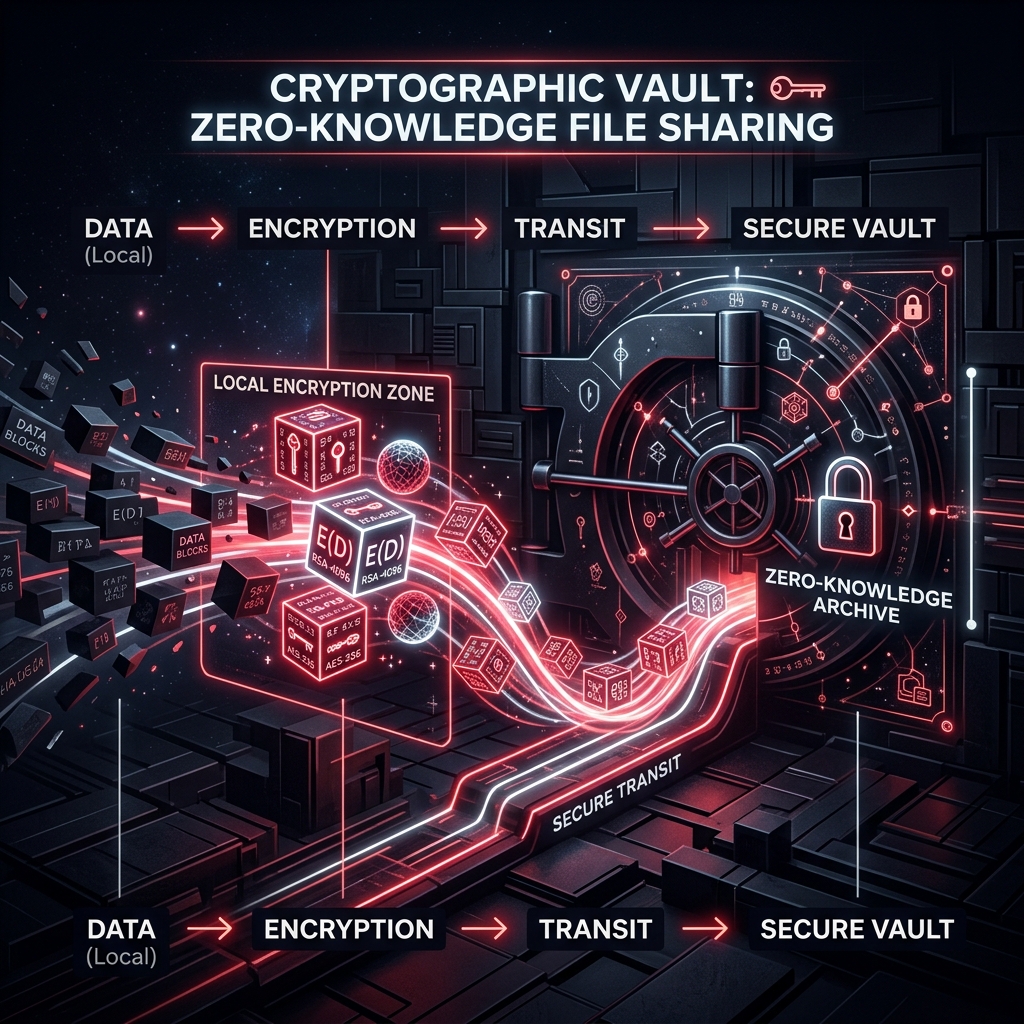
Investment banking, corporate development, M&A, and corporate legal teams have historically relied on Virtual Data Rooms (VDRs) to share sensitive documents with external auditors, buyers, and board members. While VDRs offer document organization, they come with significant drawbacks: high subscription costs, complex user setup, bloated interfaces, and most critically, custody of your encryption keys.
In this article, we compare legacy Virtual Data Rooms against modern zero-knowledge file sharing systems and examine why leading teams are moving away from traditional VDRs in favor of frictionless, client-side encrypted payloads.
The Core Difference: Decryption Key Custody
The primary risk of any cloud-based VDR is trust. In a traditional VDR configuration, your files are uploaded to the vendor's server where they are encrypted. The crucial detail is that the vendor holds the keys.
If the VDR provider experiences a database breach, misconfigures server-side access rights, or receives a subpoena, your sensitive corporate documents (such as cap tables, tax filings, and M&A decks) can be decrypted and accessed without your knowledge.
A zero-knowledge file sharing architecture, like the one powering Burnshot, eliminates this risk:
- Local Encryption: Files are encrypted inside your web browser before the bytes leave your machine.
- Client-Side Keys: The key used to decrypt the file is never transmitted to the host. It resides only in the browser hash fragment (the
#portion of the link) which is kept strictly client-side. - No Provider Access: Even if Burnshot's servers are compromised, the attacker only acquires unreadable ciphertext.
Legacy VDRs vs. Zero-Knowledge Sharing
Here is how modern zero-knowledge file sharing compares to legacy virtual data rooms across key business metrics:
| Feature / Metric | Legacy Virtual Data Rooms (VDRs) | Burnshot / Zero-Knowledge Sharing |
|---|---|---|
| Encryption Location | Server-side (vendor has decryption capability) | Client-side (in the browser; vendor has zero visibility) |
| Recipient Experience | Forced account creation, password setup, and browser plugins | Click link to open and decrypt instantly in-browser |
| Cost & Pricing | Expensive monthly minimums + per-page or per-user fees | Cost-effective flat plans or free tier for standard shares |
| Data Lifetime | Files live in the room indefinitely until manual cleanup | Automatic self-destruction (one-time view or short timers) |
| Data Footprint | Backups and caches persist across the provider's storage network | Ephemeral routing ensures no recoverable trace is left |
Why Frictionless Sharing Boosts Security
A common security paradox is that high friction leads to lower compliance. When VDRs force external partners to create accounts, download specific desktop software, or navigate slow interfaces, users look for workarounds.
We frequently see legal and financial professionals bypass corporate VDRs to email PDFs directly or drop them into public sharing links just to speed up a transaction. This creates massive corporate leaks.
Zero-knowledge sharing solves this by removing the friction:
- Send links securely: Recipients click a single link and view the file instantly in their browser canvas.
- Anti-screenshot prevention: The file is drawn directly onto a secure HTML5 canvas, preventing standard browser page downloading and discouraging casual copy-pasting.
- One-time view limits: Once the recipient closes the page, the key is gone, and the server-side payload is permanently shredded. The link can never be accessed again if forwarded.
Scaling to Enterprise Compliance
For enterprise teams that require centralized tracking without compromising their zero-knowledge architecture, Burnshot Enterprise provides isolated instances, custom domains, and SSO identity checks. This allows compliance officers to verify who accessed what file and when (complete audit logs), while keeping the actual payload content securely encrypted from the platform itself.
If your team is ready to retire bloated VDR contracts and transition to secure, zero-knowledge ephemeral storage, check out our Enterprise options or test the public secure tool directly on our homepage.